- The pandemic disrupted the impressive performance of Northern Trust Corporation which caused revenue and income slippage.
- Although it may still have to prove its commitment to the investors, dividend growth has been visible and substantial.
- The stock price remains bullish and shows undervaluation as estimated using the PE Ratio and the Dividend Discount Model.
- As things get better for the company this quarter, the achievements it recently had and the expansion of its operations may stimulate drastic growth for the succeeding fiscal years.
The operations in most industries went sour as the pandemic caused fear and shook the economy. Northern Trust Corporation (NASDAQ:NTRS) was not spared and proved that even large companies were not immune to the disruptions in the market. Nevertheless, the company remained highly functional and protected its viability from more threats posed by the restrictions in the operations. Hence, the adequate financials sustained dividend growth and its operating capacity which may put upward pressure on the stock price.
Analyzing the Financials of the Company
Interest Income and Interest Expense
Northern Trust Corporation has been operating in a wide range of financial services for more than a century. From asset and investment services to fiduciary, banking, and advisory solutions to its clients, the company continues to reap success. With its prudent management amidst the changes in the market, the company remains one of the largest and oldest banking institutions in the US.
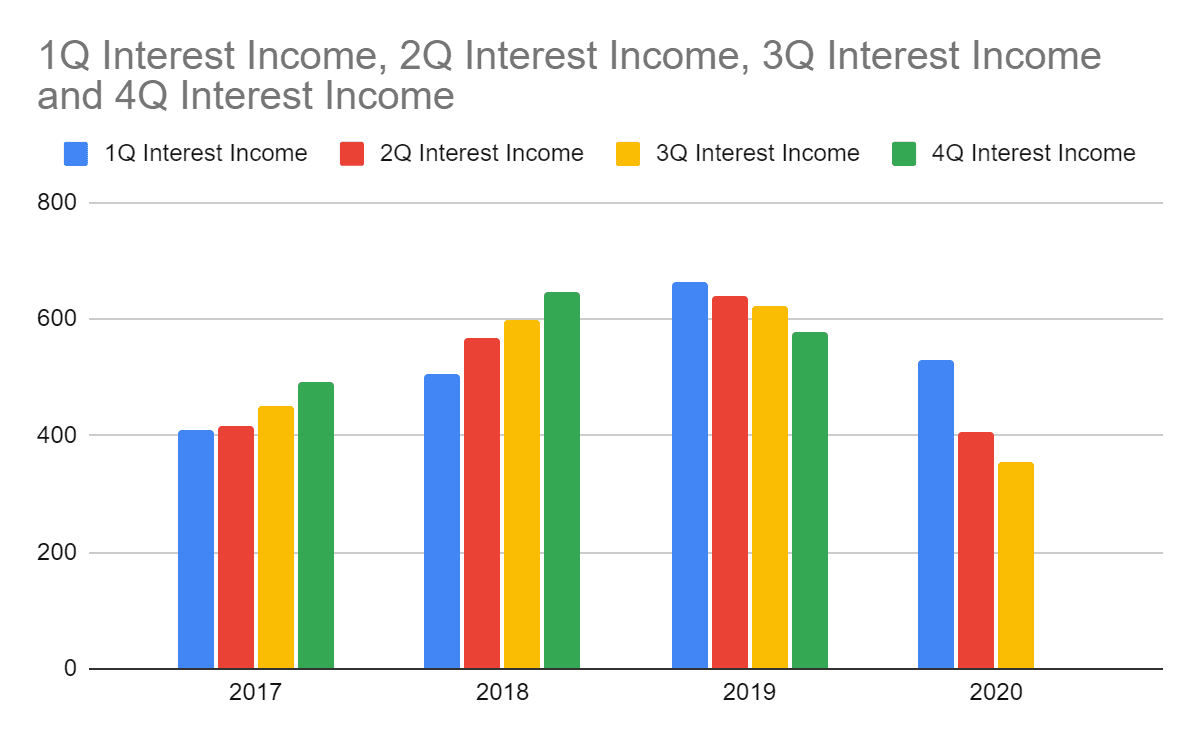
As the company handles 20% of the wealthiest families in the US, its operations continue to flourish. The revenue of the company from its core operations is primarily composed and driven by interest and non-interest income from its banking, investment, and asset management unit. But due to the volatility in the market, the analysis will focus more on interest income. The components of its interest income such as interest on loans, deposits, and dividend income have been substantially increasing. In 2009-2013, although interest income remained large, it moved in a generally decreasing trend from $1.41 billion to $1.16 billion due to valuation losses and the long-term impact of the Global Financial Crisis. But in 2014, the bank fully adjusted and the economic condition got better. The interest income has consistently increased from $1.19 billion to $1.77 billion in 2017. In 2018, it leaped by 32% as it climbed up to $2.32 billion. It made another substantial increase and $2.5 billion in 2019. Given this, the revenue already doubled in a few years. The average revenue growth of 7% for the last 10 years resulted in an accumulated increase of $1.1 billion.


