- Nike is a great company with a good growth story but at the current valuation, I am far from interested in being a shareholder.
- A free cash flow analysis indicates a measly 1.3% free cash flow yield at the current valuation.
- Even in the most aggressive analysis using higher 2019 earnings and growth figures, Nike still has very high PEG ratios of 6.8x and 8.8x based on revenue and EPS, respectively.
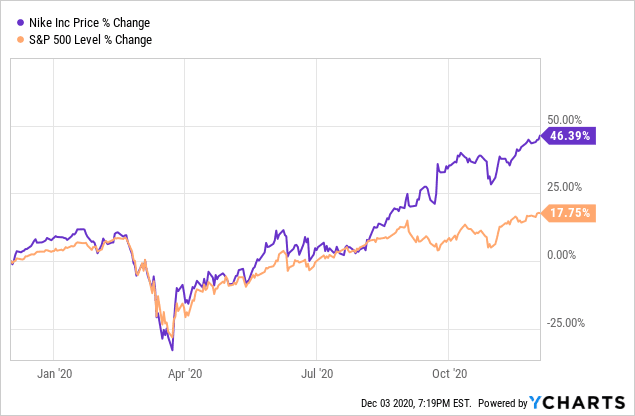
Nike’s (NKE) participation in the COVID rally leaves the valuation looking very expensive at 81.1x TTM P/E with the stock in danger of a pullback. Since I last wrote a bullish article about Nike back in March 2020, the stock has soared an amazing 103% and is now above its pre-COVID price! While the company remains solid with great fundamentals, the valuation is running ahead of itself and I would not want to be an owner at these prices. This article will take a look at Nike’s most recent results and put them into perspective with historical trends while also getting a sense of the current valuation through a PEG and cash flow analysis.
Results are Strong but Don’t Justify the Rally
In the latest fiscal Q1 2020 results for the quarter ended August 31, Nike reported relatively flat revenues of $10.6 billion which were down 1% on a reported basis but flat year-over-year (YoY) when adjusting for currency effects. The market cheered the fact that direct sales to consumers were $3.7 billion and up 12% YoY with digital sales increasing 82%. The bottom line net income was up 11% to $1.5 billion ($1,367 in Q1 2019) and diluted EPS for the quarter was $0.95 which was up 10% ($0.86 in Q1 2019).
Unfortunately, the large EPS gain was the result of considerable savings in demand creation (i.e. advertising) which was down 33% to $677 million ($1,018 million in Q1 2019) as live sporting events were postponed or cancelled due to COVID-19. The $341 million pre-tax savings from lower demand creation expenses was the primary contributor to higher net income but it is not sustainable in the long term if the global brand wants to keep its relevance with consumers.


