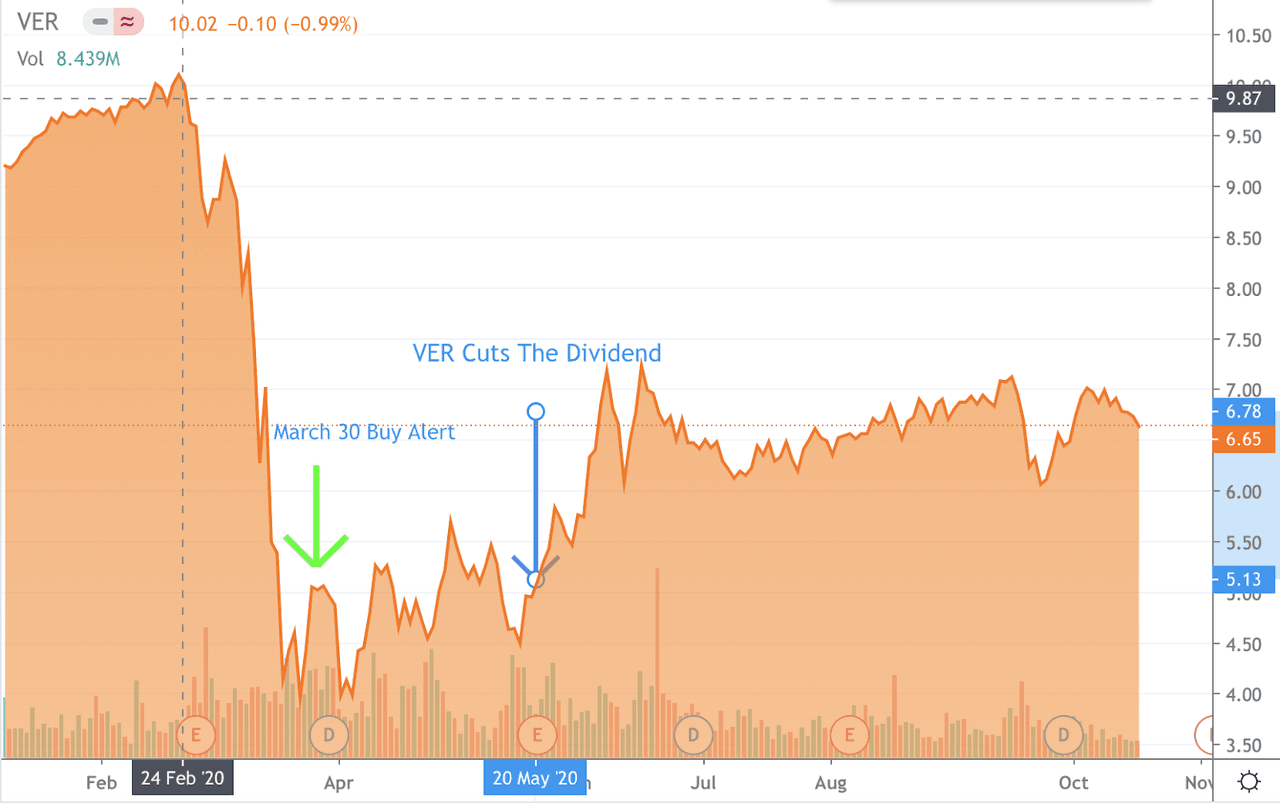
- Since cutting the dividend in May, VER stock seems to have been held back in sympathy.
- Rent collection has rebounded strongly to 95% for September.
- VER’s balance sheet is conservatively leveraged with a well-laddered maturity schedule.
- I rate shares a buy with 100% potential upside primarily from multiple expansion.
- Looking for a portfolio of ideas like this one? Members of Best Of Breed get exclusive access to our model portfolio. Get started today »
Since Vereit (VER) reduced its dividend in mid-May, its stock has more or less treaded water. Meanwhile, its financial results have improved dramatically, with rent collection at 95% for the month of September. While the dividend might not return to former levels any time soon, that is not necessarily a bad thing, as the retained cash flow can speed up external growth and lead to outsized dividend growth in the long run. I rate shares a buy with approximately 100% total return upside.
Dividend Cuts Aren’t The End
Like substantially all retail real estate peers, VER saw its stock get clobbered in March and April, as Wall Street grew increasingly pessimistic regarding the future of anything that requires in-person experience. Not everyone was convinced of that narrative, including yours truly, and I issued a buy alert for MAR in late March. Since then, VER also cut the dividend in mid-May to $0.0775 quarterly. While the stock has bounced heavily from lows, there is still tremendous upside ahead.
Second quarter adjusted funds from operations declined 15.8% to $0.149 per share, primarily due to writeoffs of uncollectible rent (mostly from the first quarter). The fact that VER continues to trade at these depressed levels seems to suggest that Wall Street is skeptical that these rents can return in the future. VER, however, has seen rent collection improve dramatically, as second quarter rent collection averaged 85%:

One typical knock on VER is its high exposure to the restaurant sector, which totaled over 20% of the entire portfolio. At first glance, such treatment appears justified considering that restaurant rent collection, especially casual dining, has been the worst performer for VER:


