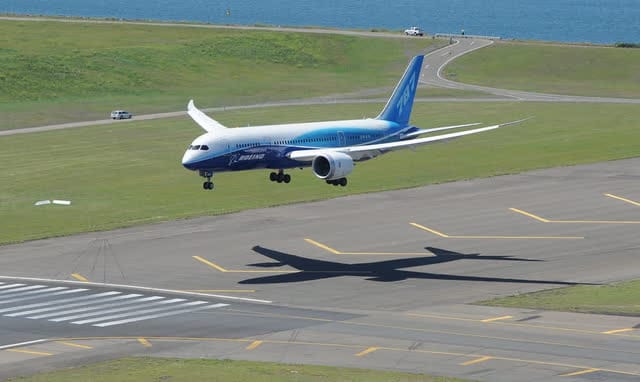
- Boeing earnings and revenues improved sequentially, but cash keeps flowing out by the billions.
- The US jet maker wants to come out of the company as a more agile entity with space for margin expansion.
- Recovery of the airline industry has been slower than initially anticipated.
- Boeing manages to get some things done, with significant MAX progress but future-proof cash cutting remains a challenge.
- Looking for a helping hand in the market? Members of The Aerospace Forum get exclusive ideas and guidance to navigate any climate. Get started today »
On the 28th of October, Boeing (BA) reported its third quarter results. Whereas we were quite downbeat in our previous assessment for the Q2 results, for the third quarter we were looking for signs of improvement in revenues, earnings and cash flow. The standard practice is to assess those numbers year-over-year. However, those numbers are meaningless. The crisis the industry is currently facing is so abrupt and deep that generally we have to accept that the numbers are ugly in year-over-year comparisons, but we should look for signs of improvements by looking at the sequential developments. Generally, that could mean that we could see some short-term positives while also acknowledging that we are still way below last year’s levels.
Boeing Commercial Airplanes: Signs of improvement
Source: Boeing
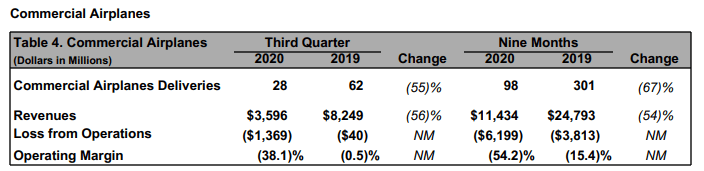
Obviously, for Boeing Commercial Airplanes (referred to as “BCA” after this) expectations aren’t high, but as we said we are looking for signs of improvements in the sequential numbers. Boeing delivered 28 aircraft, up eight units compared to Q2, and we also observed that year-over-year cumulated deliveries declined 67% compared to 71% last quarter. Sequentially, revenues increased by almost $2B which is a major improvement though to the year-to-date numbers compared to last year it does very little as the revenue decline remained stable around 50%. A significant improvement was observed in the earnings from operations or in this case the loss from operations which contracted by nearly 50% sequentially to $1.369B. Year-over-year, those numbers are still down from the near breakeven level achieved last year.


