- The company’s value proposition as a “third space” has been compromised due to the coronavirus pandemic.
- There is a reason to be optimistic about strong sales in the future. The company has dramatically improved its technological and delivery capability.
- Looking at the company’s data from its China operations is also incredibly encouraging. In Q4 2020, China’s comparable-store sales were only down 3%.
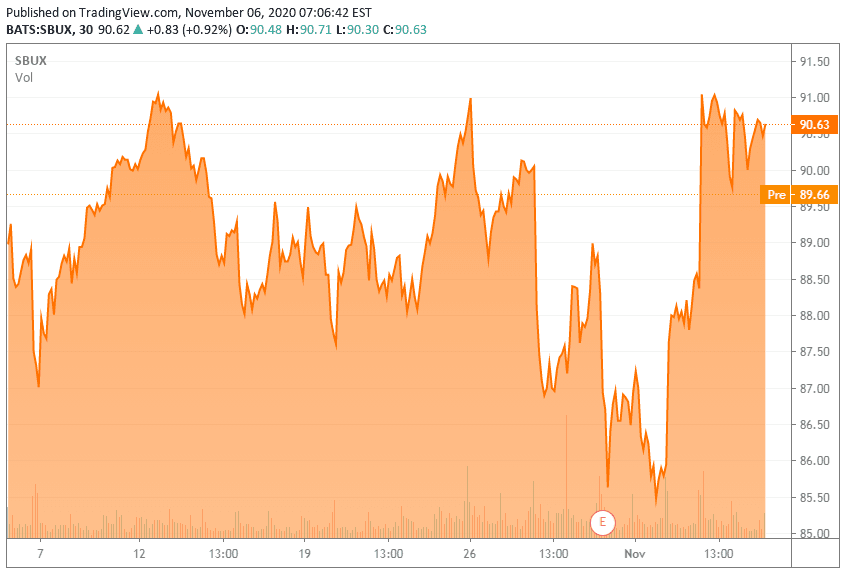
I wanted to look at some stocks that I would consider to be long-term holds. While Starbucks (SBUX) has recovered from its April lows, its share price has yet to make new highs. Despite some of the lingering pessimism due to valuation, I believe the company is a good business with decent growth potential.
Business Analysis
When analyzing a company, we first have to examine its business model and value drivers. As many of you are aware, Starbucks (SBUX) is a global coffee retailer with stores worldwide. Starbucks sells its coffee drinks through a combination of company-owned stores and licensed stores. Due to the high-quality nature of its service offering and in-store experience, Starbucks is one of the world’s most valuable brands.

Apart from its namesake store, Starbucks also operates under the following brands namely Teavana, Seattle’s Best, Evolution Fresh, Ethos, and Starbucks Reserve. The company has three operating segments namely Americas (US, Canada, Latin America), International, and Channel Development. These segments represent 69%, 23%, and 8% of 2019 revenue respectively.
As the market in the US is fairly mature, the company’s main drivers for growth are the International segment and the Channel development segment. While targeting multiple countries of international expansion, the international segment is heavily weighted towards China which has 4700 out of the 6254 company-owned stores. The Channel Development segment focuses on coffee, tea, and RTD consumer packaged goods sold in grocery stores and other outlets.
This operates primarily as a license model and Starbucks works with other companies such as Nestle (OTCPK:NSRGY) or PepsiCo (PEP) to make these products. I don’t see Channel Development as a growth driver for the company due to its small size and license model. Therefore, the key factors for Starbucks moving forward are 1) increasing margins and steady sales growth in the mature US market and 2) continued growth and expansion in the China market.


