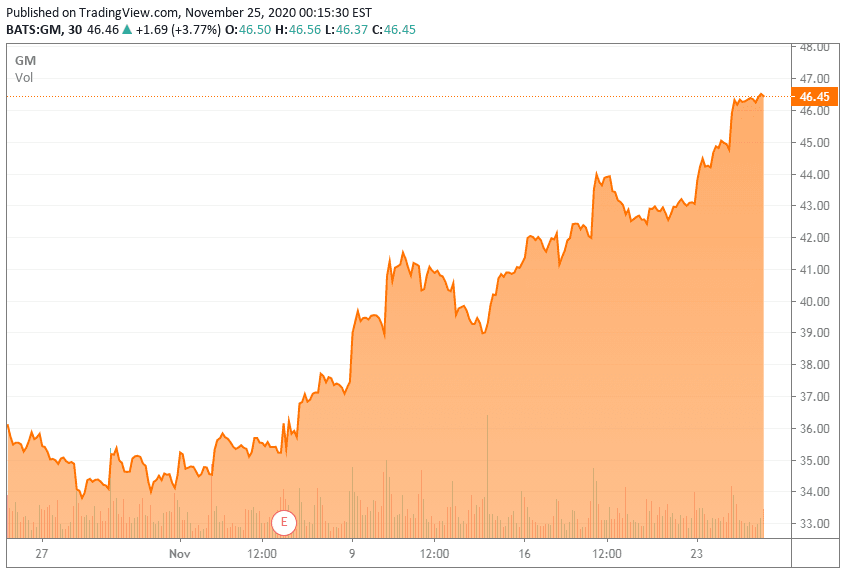
- General Motors Co. increased investment in battery-powered electric vehicles (EVs) and autonomous vehicles (AVs) by 35% or $7 billion bolsters its repositioning as an EV company.
- CEO Mary Barra declared GM’s goal as becoming an industry leader in an all-EV future, without forecasting when that will happen.
- By 2025 GM battery costs forecast to drop 60% with switch in battery chemistry, boosting range up to 450 miles and doubling energy density.
- GM continues pursuit of “third-party” users of its EV tech, though Barra didn’t mention talks with Nikola, as Dec. 3termination date looms.
- Looking for more investing ideas like this one? Get them exclusively at Auto/Mobility Investors. Get started today »
General Motors Co. CEO Mary Barra and the GM board have passed the tipping point in their commitment to an all-electric future, an initiative announced three years ago. In 2017, GM showed the flexibility to develop battery-powered EVs and to replace its gas-powered models at a pace consistent with market and regulatory conditions. The initial $20 billion investment was big; it also allowed for a pivot if events and consumer tastes slowed EVs entrance.
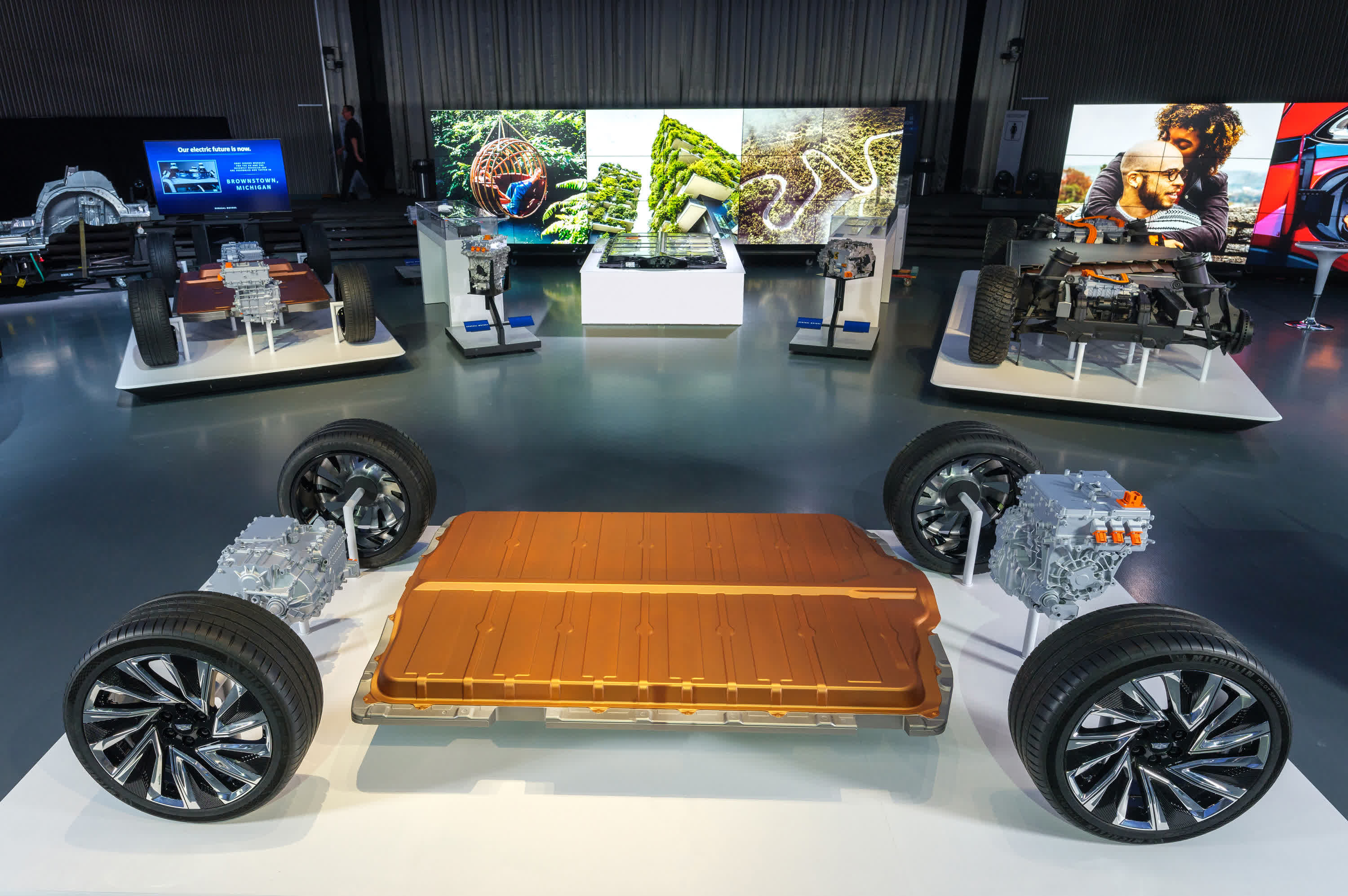 Ultium battery architecture Source: GM
As of this week, GM is signaling with a large investment increase that it’s “all in” and accelerating the switchover so as to assure leadership in fossil-free mobility. It must catch up with the likes of Tesla (TSLA) and Volkswagen AG (OTCPK:VWAGY), which are leading in EVs at the moment.
Barra’s goal is simple and explicit: to put every GM customer into an EV.
Gasoline’s Uncertain Future
With California and Great Britain the latest governments announcing their intention to ban the sale of gasoline-powered vehicles within a decade, GM has staked its future on much faster EV adoption by consumers from the current low rate. The defeat of Donald Trump is another plus for EVs, making moot his intention to reverse California’s exemption from federal clean-air standards; the exemption led the way to the state’s redefinition of CO2 as a pollutant, the rationale for a zero-emission vehicle mandate.
With Democrats about to retake the White House, including the Environmental Protection Agency, the auto industry surely will face tighter fuel-efficiency standards whose ultimate goal is to hasten gasoline’s replacement by electricity.


