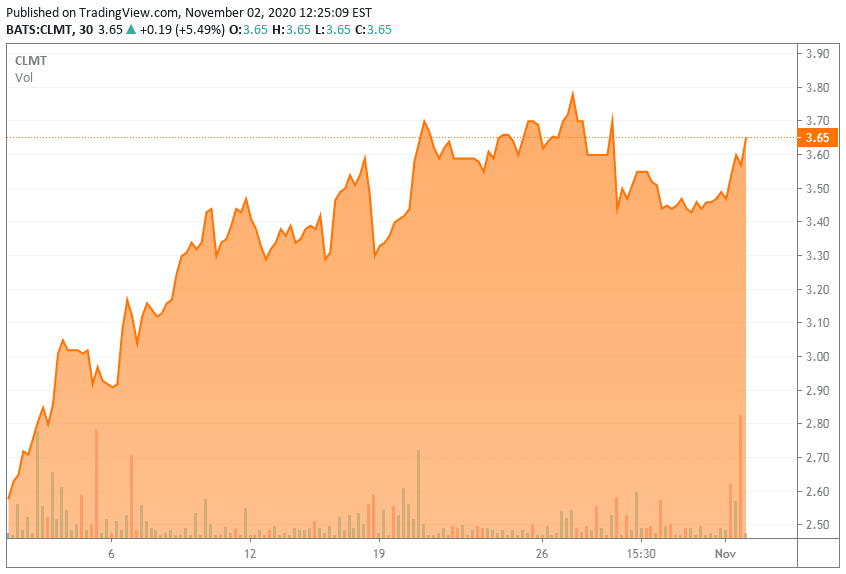
- News outlets reported that Calumet is considering selling the lubricants portion of its specialty business.
- The inclusion of this options could significantly lower the company’s leverage while still leaving a viable business.
- If Calumet sells both Great Falls and a portion of the specialty business, we suspect that the remaining portion of the company will also be sold.
Last week several news outlets broke a story that it hired a consultant to help Calumet Specialty Chemicals (CLMT) sell its Finished Lubricants business, which is a part of the specialty business. This announcement along with the already announced intention to sell its last remaining refinery (Great Falls) earlier this year means that the company is now much closer to completing its turnaround plan started 4 years ago with the suspension of its dividend.
The Options
Selling the Finished Lubricants business or Great Falls would greatly transform the company from being highly leveraged, to being a smaller company with a manageable debt profile. Such an outcome would create a path to reinstating a distribution or may ultimately signal that the rest of the business will be sold off. Perhaps with selling one or more business units the company may elect to change its corporate structure from an MLP to a C-Corp, which would pave the way to growing the remaining business through targeted acquisitions as access to cheaper capital would be possible with this new structure. It is possible that only one of these businesses will be sold, but that Calumet elects to keep the other because they are not able to get a price that ultimately accelerates their de-leveraging efforts. It is also possible that none of the businesses will be sold and that the company attempts to de-lever organically. We are going to look at all of these options and try and figure out which one makes the most sense in a post-Covid environment.
To properly evaluate each option we have to start with what we believe to be a realistic assessment of the business and its cash generation over the next several years. Our base case assumes that the company does not have any asset sales, refining operating metrics return to normal in 2022, and that they end this year (2020) with total net debt of $1,300 million. We are also assuming that the business will command a multiple of 6 given that refining is still a major contributor to EBITDA. We therefore see the 5 year model as follows:


