- Ford’s valuation is unjustifiably higher compared to automaker peers.
- Ford’s new EVs and assisted-driving technologies are nothing special.
- 38% of Ford’s assets involve credit receivables, in which many of those loans were issued to customers with presumably poor FICO scores.
- Due to shifting macroeconomic and demographic trends, Ford’s ‘cash-cow’ pick-up truck segment may experience much lower sales and profitability in the future.
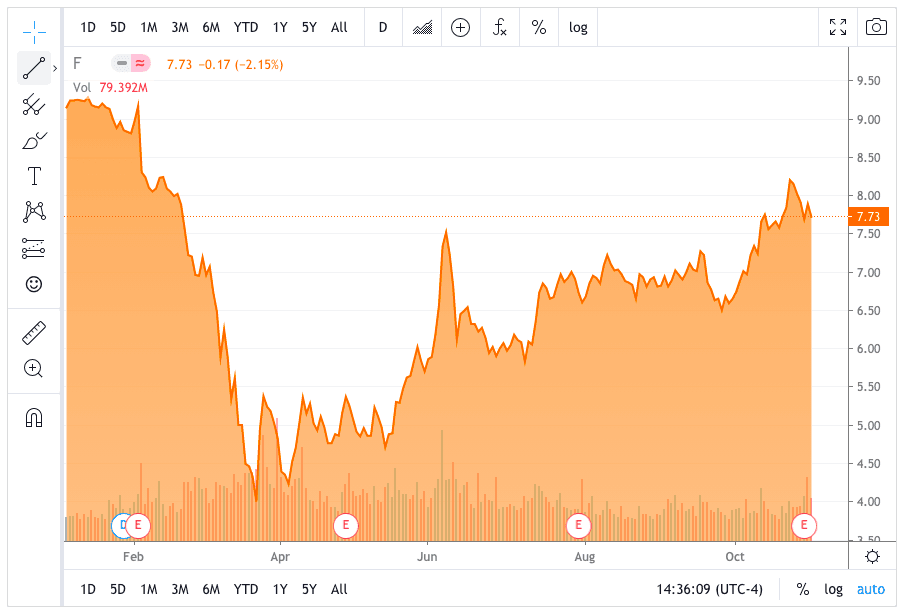
Ford Motor Company’s (NYSE:F) stock has seen some wild swings in the past few months and has risen close to 100% since April. We believe that this rise has partly been driven by industry-wide hype for new electric vehicles that are being newly produced by prominent automakers. However, we believe that many factors will hinder Ford’s growth in the near and long-term future: Ford’s rapid expansion of their financing program creates significant risk, Ford is stuck in a market of many competitors without differentiating factors, and Ford faces several macroeconomic risks.
(Ford Stock Market Chart – TradingView)
Ford stock is expensive on a comparables basis
To determine whether Ford’s current share prices are justified, we analyzed Ford’s trading multiples relative to competitors similar in size and geographic scope. We found that Ford trades at a significant premium to its competitors both on a revenue and EBITDA basis. As of October 31, 2020, its TEV/Revenue ratio of 1.2x is 33% higher than the comparable set median. Even more outrageously, its TEV/EBITDA ratio is 109% higher than the comparable set median.

Source: CapIQ and Ophelia Research analysis
Such premiums imply that Ford either has had outstanding historical financial performance or outstanding future growth prospects. But, as we will prove in the following passages, neither of these is true.


